

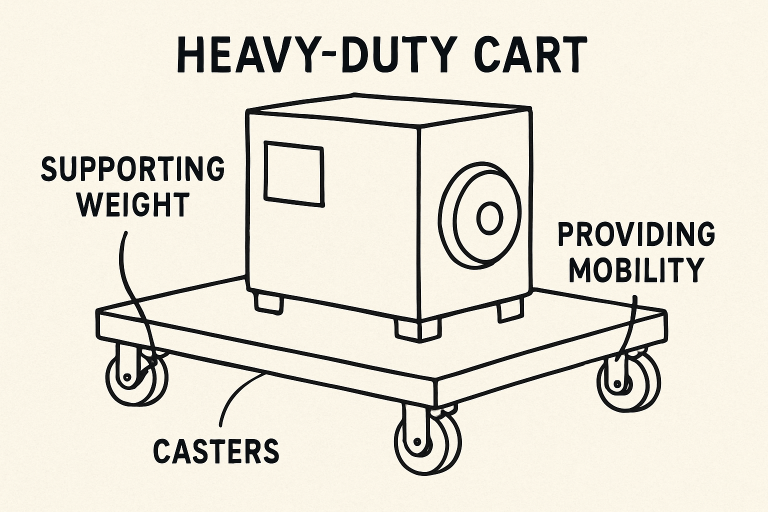
Choosing the right casters for heavy-duty applications is an essential process for anyone seeking to move substantial equipment safely, efficiently, and with minimal damage to flooring or property. Durable casters that fit your project can not only streamline operations but also minimize maintenance costs in the long run, supporting workplace safety and productivity. As you navigate the broad range of caster types, options like low profile casters stand out for situations where stability and minimal clearance are essential. Understanding your choices and variables leads to a safer, smoother material handling experience. When choosing casters for carts, hospital beds, or shelving, consider factors beyond weight capacity, like floor conditions, environment, and mobility needs. Proper evaluation prevents costly mistakes, downtime, and injuries, emphasizing safety, durability, and efficiency to maximize equipment lifespan. Tailor your caster selection to your environment. This guide covers key criteria for informed decisions in heavy-duty applications.
Assessing Load Capacity
Load capacity is the bedrock of caster selection. Assess the combined maximum weight of your equipment plus any anticipated contents. Divide this total by the number of casters under consideration, taking the extra measure of dividing by one less caster to account for uneven floors or weight distribution. For example, a 2,000 lb setup spread across four casters should account for at least 667 lbs per caster, calculated by dividing 2,000 by 3 to ensure redundancy and safety. Casters rated below this threshold can fail under pressure, risking damage to machinery and floors.
Selecting the Appropriate Wheel Material
The choice of wheel material has a significant impact on caster performance, floor protection, and durability. Polyurethane offers a good balance for industrial use, while steel or cast iron provides high load-bearing capacity and durability, but may be harsh on floors. Rubber wheels excel in vibration absorption and quiet operation, but can be unsuitable for heavy loads. Using the incorrect wheel type can negatively impact equipment longevity, damage floors, and increase ergonomic strain on workers.
Determining the Optimal Wheel Size
Wheel size plays a crucial role in caster performance. Larger wheels can overcome obstacles and imperfections in flooring more easily, require less force to initiate movement, and distribute weight more broadly protecting both the floors and the caster assembly. For heavy-duty use, a minimum wheel diameter of eight inches is often ideal, though consider your project’s exact spatial constraints and clearance requirements. Properly sized wheels extend caster longevity and support smoother operation.
Choosing Between Swivel and Rigid Casters
Deciding between swivel and rigid casters has a significant impact on equipment maneuverability. Swivel casters enable a full 360-degree rotation, making them ideal for areas that require intricate navigation and frequent directional changes. In contrast, rigid casters are fixed in direction, best for maintaining a straight path and offering enhanced stability during transport. Often, operations utilize a combination of both: two rigid casters paired with two swivel casters, which facilitates both straight-line stability and maneuverability when necessary.
Considering Environmental Factors
Consider environmental factors when selecting casters. Evaluate floor conditions smooth floors allow more flexibility, while rough surfaces may need shock-absorbing wheels. Account for temperature extremes; materials must withstand high or low temperatures without deforming. For areas with chemical or moisture exposure, choose stainless steel casters or those with protective coatings to prevent corrosion.
Prioritizing Maintenance and Durability
Casters are subject to constant wear and demand occasional upkeep. Opt for models with sealed bearings to prevent contamination from dust or debris, which significantly reduces the need for regular lubrication and cleaning. Additionally, prioritize materials known for their longevity and resilience. Regular checks for wheel wear, fastener security, and bearing integrity enhance lifespan and reduce unexpected downtime caused by equipment failure.
Incorporating Safety Features
Safety should shape every part of the selection process. Prioritize casters with reliable brakes or locking mechanisms, especially in environments where heavy equipment might roll unexpectedly and endanger teams or property. Confirm each caster is rated for the anticipated maximum load. Avoid overloading at all costs, as this increases the risk of accidents or breakdowns.
Balancing Cost and Quality
While upfront savings may be attractive, investing in higher-quality casters is a more cost-effective long-term solution. Inferior casters break down, need replacing, and risk equipment damage raising total costs. Consider the total cost of ownership, including maintenance, repair, and workflow disruptions. Quality casters offer peace of mind, stability, and reliable performance, justifying the initial cost through durability. Carefully selecting casters for heavy-duty use protects equipment, ensures smooth operations, and reduces long-term costs. These best practices safeguard assets and personnel, delivering long-lasting results in demanding industrial environments.
Conclusion
Choosing the right casters involves considering load capacity, wheel material, size, type, environmental conditions, maintenance, and safety features. This ensures smooth movement, protects floors and equipment, and reduces ergonomic strain. High-quality, durable casters improve efficiency, lower downtime, maintenance costs, and safety risks. Good caster selection balances performance, reliability, and cost, supporting industrial needs and safeguarding assets and personnel.
Must Read: How Regular Tree Care Enhances Your Property Value
