

Key Takeaways
- Explore innovative eco-friendly water heater models to lower energy bills and environmental impact.
- Assess the strengths and requirements of heat pump, tankless, and solar water heaters before deciding.
- Boost efficiency with water conservation fixtures and best practices throughout your home.
Making the switch to sustainable home water heating isn’t just about saving money it’s about supporting a cleaner environment and paving the way for more innovative home energy use. In recent years, awareness of climate change and a desire to reduce household energy consumption have prompted more homeowners to seek innovative, energy-efficient water-heating options. Homeowners today are searching for the latest green technologies that not only lower costs but also help reduce carbon footprints, making a positive impact on the planet. The market is evolving to match these demands, with new solutions entering the scene more than ever before. Whether you’re building a new property or upgrading an existing system, it’s important to select a solution that aligns with your budget, climate, and unique daily hot water needs. Making the right choice can feel overwhelming, but with the vast array of products and professionals available, you’ll never need to navigate it alone. You can rely on Water heater service specialists in Indianapolis to help guide your installation and maintenance choices for maximum efficiency and peace of mind.
The right water heater has the power to shrink household utility bills, reduce your family’s reliance on nonrenewable resources, and deliver reliable comfort all year round. As energy costs rise and environmental concerns mount, the importance of choosing a solution that’s both cost-effective and future-friendly becomes evident. Navigating the various technologies, rebates, and installation concerns can seem daunting at first, but equipped with the correct information, you’ll be able to make a well-informed decision that meets your needs and lifestyle. Ultimately, an efficient water heater is more than just a modern convenience it’s an investment in your home’s value and an essential contribution to a cleaner, more sustainable world.
Heat Pump Water Heaters: Harnessing Ambient Energy
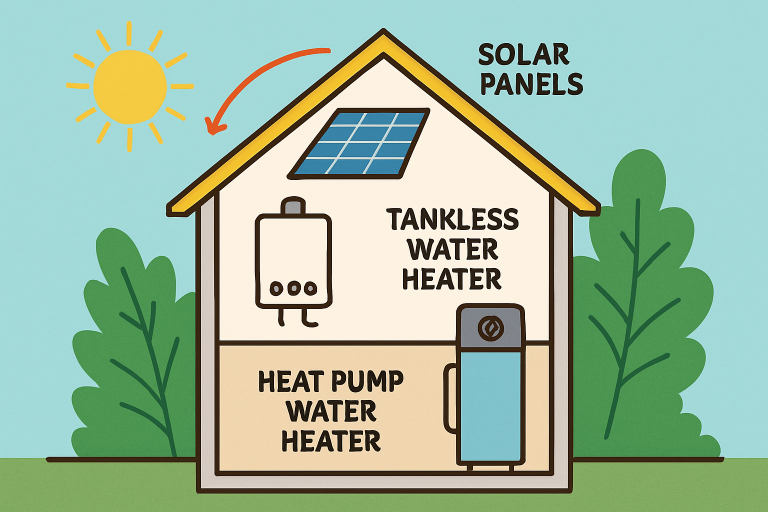
Heat pump water heaters (HPWHs) stand out for their exceptional efficiency and their ability to draw heat directly from the surrounding air. Unlike traditional electric or gas models that generate heat directly through energy-intensive processes, HPWHs transfer ambient heat into the water tank, yielding remarkable energy savings. According to the U.S. Department of Energy, these systems can use up to 60% less electricity than conventional models, translating into significant long-term savings for households. These savings can add up to hundreds of dollars per year, especially in larger households. Another benefit is their quieter operation and less direct emissions compared to fossil-fuel-based heaters.
While HPWHs excel in warm climates and require sufficient space for proper air circulation, they have become increasingly practical through design improvements that accommodate colder regions and tighter layouts. The initial purchase cost of a heat pump water heater is usually higher than that of a standard electric or gas heater. Still, energy rebates and lower monthly bills can quickly tip the scales in its favor, making it an attractive long-term investment. Additionally, more energy-conscious homeowners are finding that HPWHs reduce environmental impact while still offering the hot water reliability and comfort families expect.
Tankless Water Heaters: On-Demand Efficiency
Tankless or on-demand water heaters represent a groundbreaking advance in energy-efficient home technology. These units activate only when you turn on a hot water tap, immediately heating water as it flows through the device and turning off when your demand ends. This innovative, on-demand system eliminates the standby heat loss common in traditional storage-tank water heaters, where energy is continuously used to keep water hot even when you’re not actively using it. The Department of Energy estimates that tankless systems are 24–34% more efficient than storage water heaters for homes using less than 41 gallons of hot water a day, making them ideal for smaller households or properties with lower water use.
Their compact size allows for flexible installation, fitting into tight spaces, attics, or even exterior locations, making them especially suitable for apartments or smaller modern homes. Another benefit of tankless units is their longevity many models outlast traditional tanks, requiring less maintenance and resulting in lower long-term expenses. However, it’s important to size your tankless system appropriately to ensure it keeps up with simultaneous hot water demands, such as running showers and appliances at the same time.
Solar Water Heaters: Utilizing Renewable Energy
Solar water heaters harness the abundant, free power of the sun to deliver eco-friendly hot water. These systems use rooftop solar collectors to collect heat from sunlight, which is then transferred to water stored in a highly insulated tank for use throughout the home. For households in sunnier climates or those with enough unobstructed roof space for panels, solar water heating provides a strong return on investment over the system’s lifespan. According to the National Renewable Energy Laboratory, a properly sized solar water heater can provide up to 80% of a household’s annual hot water requirements, dramatically offsetting energy usage from nonrenewable sources and shaving hundreds off yearly utility bills.
Additionally, solar water heating systems can increase a home’s value and may qualify for significant tax credits and local incentives, further offsetting the higher upfront costs. However, the initial investment and ongoing maintenance requirements, as well as the variability of output due to weather and seasonal changes, should be considered. In many locations, combining a solar water heater with a backup conventional system delivers both ecological and practical benefits, ensuring hot water is always available regardless of outdoor conditions.
Water Heat Recycling: Reclaiming Energy
Innovative water heat recycling systems sometimes called drain water heat recovery units are becoming a popular addition to eco-friendly homes. These systems work by capturing the warmth from wastewater draining out from showers, bathtubs, or washing machines and using it to preheat incoming cold water before it reaches the water heater. This means your system doesn’t have to work as hard to bring water up to the desired temperature, reducing the total energy needed for each use. According to the U.S. Department of Energy, this approach not only saves a significant amount of energy but can also repay its installation costs in just a few years through reduced utility bills.
Water heat recycling systems are most effective in homes with multiple hot water fixtures used simultaneously or for extended periods, such as in larger families or multi-unit properties. Their unobtrusive design allows integration in both new builds and retrofits, making them an accessible option for a wide range of households seeking incremental yet meaningful energy savings.
Implementing Water Conservation Measures
Upgrading your water heater is just one part of the sustainability puzzle. Implementing additional water conservation measures throughout your home can maximize overall efficiency and compound your energy savings. Installing high-efficiency, low-flow showerheads and faucets can dramatically reduce hot water consumption while maintaining a satisfying experience. Over time, these fixtures conserve both water and energy—helping homeowners to save on utility bills and support water conservation efforts.
Recirculating pump systems are another effective option; by keeping hot water readily available at taps and showers, they eliminate the wait for water to heat up and the waste associated with letting cold water flow down the drain. This not only trims water waste but also increases comfort and speed for daily household routines. Coupled with timer controls or smart sensors, these conservation upgrades ensure the most energy-efficient and eco-conscious hot water delivery possible.
Evaluating Your Home’s Needs
To choose the ideal eco-friendly water-heating system for your household, take the time to consider your family’s unique hot-water usage patterns, your home’s layout and insulation, and your local climate. Analyze factors such as how many showers or appliances use hot water at once, the size and occupancy of your home, and the physical space available for system installation. Don’t forget to factor in your overall budget. While solar water heaters and heat pump systems may require higher upfront costs, generous tax credits, utility rebates, and federal incentives can help offset these costs considerably.
Qualified professionals are invaluable in this process and can assess your home’s unique characteristics to recommend and safely install the most suitable and efficient system. Their expertise not only ensures proper sizing and setup but also ensures compliance with local codes and rebate requirements, delivering safe, optimal results for years to come.
Conclusion
Embracing eco-friendly water heating solutions delivers benefits far beyond monthly savings. Whether your motivation is heightened comfort, reduced environmental impact, future-proofing your home, or all three, switching to a sustainable water heater aligns your property with modern energy-efficiency standards. With good planning, the right system can ensure a reliable hot water supply, significant utility savings, and a smaller carbon footprint, helping move your household closer to a greener future. By seeking reputable advice and leveraging incentives for efficient upgrades, every homeowner can take steps toward a safer, more sustainable, and more comfortable living environment.
