


Building wealth is one thing. Defending it in case your assets are in more than one state? It is where it becomes surprisingly complicated. If you have a property in Queensland, have investments in New South Wales, and are a resident of Western Australia, you are not alone but you may be going through a legal minefield without even noticing it.
The federated nature of Australia implies that each state has its own property laws, stamp duty calculations, and estate planning laws. What is ideal in Victoria may cause a nightmare in South Australia. Learning these differences is not only about trying to avoid these legal hiccups but also about ensuring that whatever wealth you have taken so long to build is not going to get stolen regardless of where it is stored.
Navigating Interstate Property Laws and Conveyancing Differences
It may seem that it is easy to own assets in Australia because we all have the same national system. The truth of the matter is quite the opposite. Every state has its style of property transactions, estate planning, and protection of assets.
Take cooling-off periods, for example. In New South Wales, customers have a five-day period to rethink property purchases, whereas in Western Australia, there is no statutory cooling-off period whatsoever. The Queensland contracts generally have certain building and pest inspection conditions which are quite different to the NSW practices. These are not small technicalities, but the distinction between legal protection and an immediate binding agreement.
In the case of your estate, the property that is located in other states will need extra legal procedures. A will prepared in South Australia applies to assets located in Australia, although your executor will have to apply to the Supreme Court in each state where you hold assets to have the grant re-sealed. The process is time-consuming, complex, and adds expense to an already challenging time for your loved ones.
Family Trusts and Legal Structures for Multi-State Asset Protection
Proper legal structuring is one of the best methods of securing assets across state lines. Trusts, especially, provide an excellent asset protection and flexibility combination. A properly structured family trust would protect your wealth against legal issues and offer tax efficiency and flexibility in the manner in which your assets are allocated.
Not every trust is equal, however, particularly with interstate properties. Discretionary trusts offer good protection of assets and access to the 50 percent capital gains tax discount, but do not offer tax credits on negatively geared assets. Land tax thresholds are also different NSW trusts often don’t get the land tax threshold, while Victoria offers only a small one. Such details are important when you are computing the real cost of owning a property in various jurisdictions.
A skilled financial planner in Perth, or any other major location where you base most of your operations, can assist you to make these structural decisions with ease. The right adviser knows how various state laws interplay and is able to create a protection plan that takes into consideration your whole portfolio, not just the assets in a single place.
Secure Private Vaults and Bullion Storage Solutions in Australia
Legal frameworks will only guard you on paper, but physical assets require a different strategy. In case you have amassed valuable items, precious metals, valuable documents, jewelry, or cryptocurrency storage devices, it becomes a viable challenge to keep them safe at more than one location.
Most wealthy Australians are resorting to the services of specialised bullion storage vaults and other such services in other cities as an up-market alternative to home safes. These special-purpose facilities have a number of benefits: climate-controlled conditions, professional security systems with 24/7 surveillance. In the case of the SMSF holder of physical bullion, professional vault storage can offer the insurance cover and independent audit trails required to remain in compliance.
The beauty of a professional storage facility is that you can access your assets when required and the level of security is maintained which would have been too expensive to do at home. Others have units capable of accommodating up to 800 kilograms and can be used in large holdings.
Interstate Tax Strategy, Capital Gains, and Stamp Duty Management
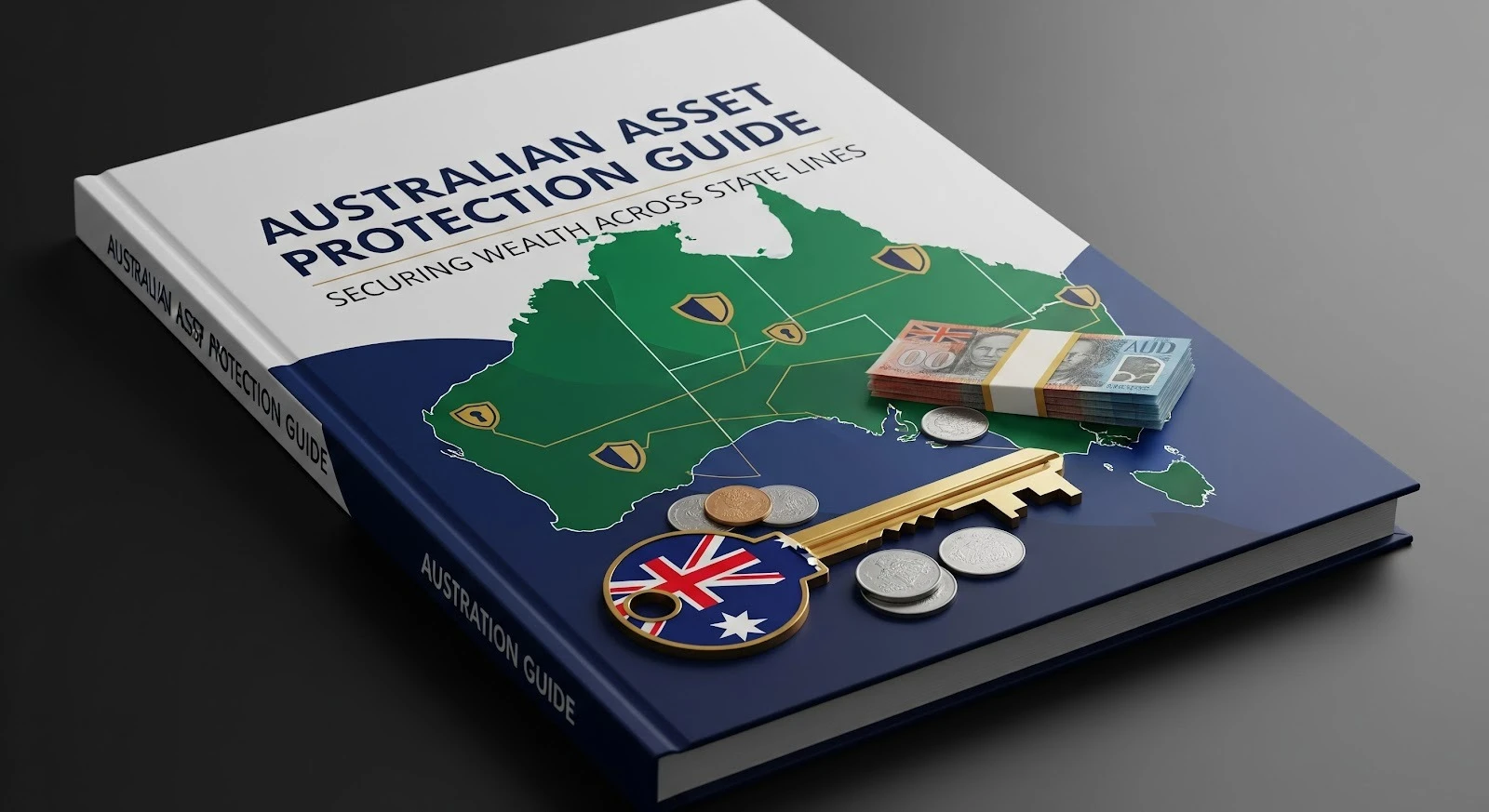
The problem of taxation when you have assets in more than one state is something that must be planned. The personal tax rate in Australia is the second highest in the OECD countries as a proportion of the total taxes, and therefore, tax strategy is a key to wealth preservation.
The capital gains tax is especially significant in a multi-state portfolio. Selling the properties or investments at the time of the year when you have lower total income or capital losses can save you a lot of tax. It is important to look at your whole financial picture in all states, not on a case-by-case basis.
The stamp duty computation is also vastly different across jurisdictions. The approach adopted by Victoria is not the same as that of Queensland and the difference may be in tens of thousands of dollars in property transactions. These costs should be considered before you make a decision to purchase new assets in any state.
Interstate Estate Planning and Resealing Grants of Probate
This is one thing that most people fail to understand before it is too late; when one passes away without a proper estate plan, your multi-state assets may be subjected to various intestacy laws and thus cause confusion and conflict to the family. With a will, administration of an interstate estate means hiring solicitors in each state and receiving recognition by the Supreme Court of each state.
Strategic planning can make this process much easier. Other families opt to write different wills in both jurisdictions where they have significant assets, but this must be well coordinated to prevent conflict. Others pool ownership of assets by use of trusts or corporate entities that minimize the jurisdictions in which the estate is administered.
It is important to have your estate plan reviewed on a regular basis, particularly when you purchase or sell assets in other states. All properties, investments and accounts and their locations should be well defined in your will. This roadmap simplifies the administration process and nothing is left out.
Developing a Holistic Wealth Management Strategy for Interstate Assets
Securing interstate wealth is not a case where a one-size-fits-all solution is used. It is about knowing where your assets lie, how they are treated by each state and developing a unifying strategy that takes into consideration these differences. Diversification is good, however, unless well structured and planned, diversification of your assets in Australia may create more problems than solutions.
The colleagues that you collaborate with are of paramount importance. Attorneys who know how to do interstate property transfers, accountants who know the tax planning in more than one jurisdiction, financial consultants who can look at the big picture these people will save you more than they will cost. They are the ones that pick up the problems you did not even consider to investigate and prevent you from making costly mistakes.
Another layer that cannot be ignored is the insurance. In addition to conventional property insurance, take into consideration how professional indemnity, public liability, and personal asset protection insurance could be part of your overall plan, especially when your wealth creation is business-related and is associated with liability risks.
Must Read: The Ultimate Guide to Backing Up Medical Records Forever
