

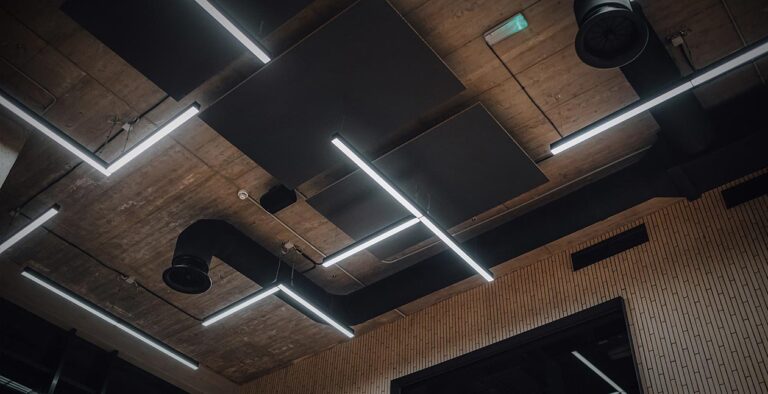
When designing a modern commercial space or a high-end home, lighting is often thought of as a purely visual choice. Architects and interior designers spend hours picking the perfect color temperatures, brightness levels, and physical fixtures to sculpt just the right mood. But the truth is, what actually makes or breaks a lighting project happens entirely behind the drywall.
The reality of linear lighting is that premature color shifting, early burnout, and annoying micro-flickering are rarely caused by the light strips themselves. Instead, these issues almost always stem from a mismatch between the light strips and the underlying power infrastructure. To get a flawless installation that lasts for years, you have to look at the project as a single, connected system where the power delivery and the light source work in perfect harmony.
The Mechanics of Linear Illumination Density
Modern architectural design has seen a massive shift toward low-voltage linear accent lighting. These flexible strips allow light to be integrated directly into custom woodwork, dramatic ceiling coves, and sharp building outlines. But as we push for cleaner, brighter designs, the setup gets a bit more complex. High-density layouts like strips packed with 180 or even 240 lights per meter require careful planning to make sure the light stays completely uniform from the first inch to the very last.
This consistent brightness depends heavily on understanding the physical limits of the hardware. For instance, when installing high-output LED Strip Lights, technical teams have to plan around a natural electrical quirk known as voltage drop. Because flexible circuits rely on thin copper pathways, electricity runs into more resistance the further it travels. In a standard 12V system, this resistance causes the voltage to dip by the end of the line, leaving you with dim lighting or shifted colors at the tail end of a long run. Stepping up to a 24V setup cuts the required current in half for the same wattage, allowing for much longer, perfectly balanced runs without needing to splice in extra power feeds midway through.
The physical build of the circuit board also matters. Quality linear systems use a thicker, 3oz copper layer to help pull heat away from the diodes and keep electricity flowing smoothly. When planning intricate layouts for canopies, corridors, windows, or archways, opting for advanced options like dot-free Chip-on-Board (COB) or free-cutting flexible modules makes installation incredibly easy while giving you a seamless, hotspot-free glow across highly visible surfaces.
Deconstructing Power Infrastructure: Load and Weather Protection
If the light strip is the vehicle, the power supply is the engine. Converting standard wall power into clean, steady low-voltage power requires robust internal parts that can handle voltage spikes and keep the current perfectly smooth. Picking the right driver is about much more than just matching the wattage on the box; it requires looking at your total power load and where the lights will be living.
A golden rule in electrical work is the 80% Rule. To keep a transformer from overheating and wearing out early, the continuous load of your lighting should never cross 80% of the power supply’s maximum capacity. For example, if a high-performance RGBW setup draws a maximum of 88W in a specific zone, the power supply needs to be rated for at least 110W to give the system enough breathing room.
Where you install the lights changes the engineering requirements completely. Lighting tucked into exterior facades, ground pathways, or moisture-heavy interior coves needs serious protection against water. While an IP65 rating is great for dust and regular splashes, demanding spots like outdoor walkways or water features need specialized IP68 engineering. A true IP68 setup ensures that even if the lights are running continuously underwater at a depth of 3 meters, the internal circuitry stays completely dry, eliminating any risk of short circuits or safety hazards.
Sourcing Standards and Smart Planning
At the end of the day, a stable lighting setup comes down to how well the components were built in the first place. Commercial-grade power solutions stand out because they go through strict testing, carry international safety certifications like UL and CE, and are built to last for years. When engineering teams vet a professional LED Power Supply factory, they look closely at component quality, precise assembly, and factory stress-tests to make sure the units can handle the demands of daily commercial use.
Before installing anything, it is always smart to do a quick double-check to confirm that the power supply’s output matches the exact electrical needs of your light strips. This simple step prevents common installation headaches, like overloading a control channel or accidentally reversing the positive and negative wires during a busy setup.
For large-scale projects that need reliable bulk ordering and solid engineering support, working directly with established manufacturers makes a world of difference. For example, Shenzhen Dekingled Co., Ltd., established in 2014, focuses on building high-performance linear hardware and power systems that hold up in tough architectural environments. Based at the 4th Floor, Building C, SanMing Industrial Park, Shiyan Town, Bao’an District, Shenzhen, China, they focus on providing fast delivery, cost-effective options, top quality, and direct technical support to keep projects running smoothly.
Control Layouts and System Harmony
The final piece of the puzzle is how you control the lights. Modern spaces rely heavily on smooth dimming, zone controls, and color mixing to change the vibe of a room throughout the day. Managing these changes smoothly requires smart controllers that can handle the power load without causing the lights to flicker or create an annoying buzzing sound in the wall.
Using high-quality dimming methods with deep color steps ensures that shifting from bright daylight to a soft evening glow looks completely seamless to the human eye. When dealing with high-load setups like multi-channel RGB or RGBW controllers driving long continuous runs keeping an eye on the maximum current per channel protects your gear from overheating.
Stunning linear lighting doesn’t happen by accident; it’s all about the math. When the light strips, weatherproof housings, and power supplies are planned to work together as a single, unified team, the technology disappears leaving behind nothing but clean, beautiful light that lasts.
Field Installation Checklist
Before your team starts mounting fixtures, make sure these baseline checks match your project plans:
| What to Check | Field Requirement |
| Voltage Match | Double-check that your input voltage matches the strip (12V to 12V, 24V to 24V). Never connect a low-voltage DC strip straight to a standard AC wall outlet. |
| The 80% Safety Margin | Keep the total wattage of your lights under 80% of the power supply’s maximum capacity. |
| Weather/Water Ratings | Match the environment to the right rating: IP20 for dry indoor spots, IP65 for splash areas, and IP68 for continuous submersion down to 3 meters. |
| Wire Distance | Factor in the distance between your power supply and the lights. Use thicker wire for long runs to prevent voltage drop before the electricity even reaches the strip. |
